czwartek, 28 maja 2015

Krakow City of Literature

Krakow addition to own wealth of monuments, is well known for intellectual richness. In particular, for recognition deserves field of literature, because of Krakow is connected to many forms of merit in the field of literature. For this reason, officially he gained the title of UNESCO city of literature. Reasons for this title were many.
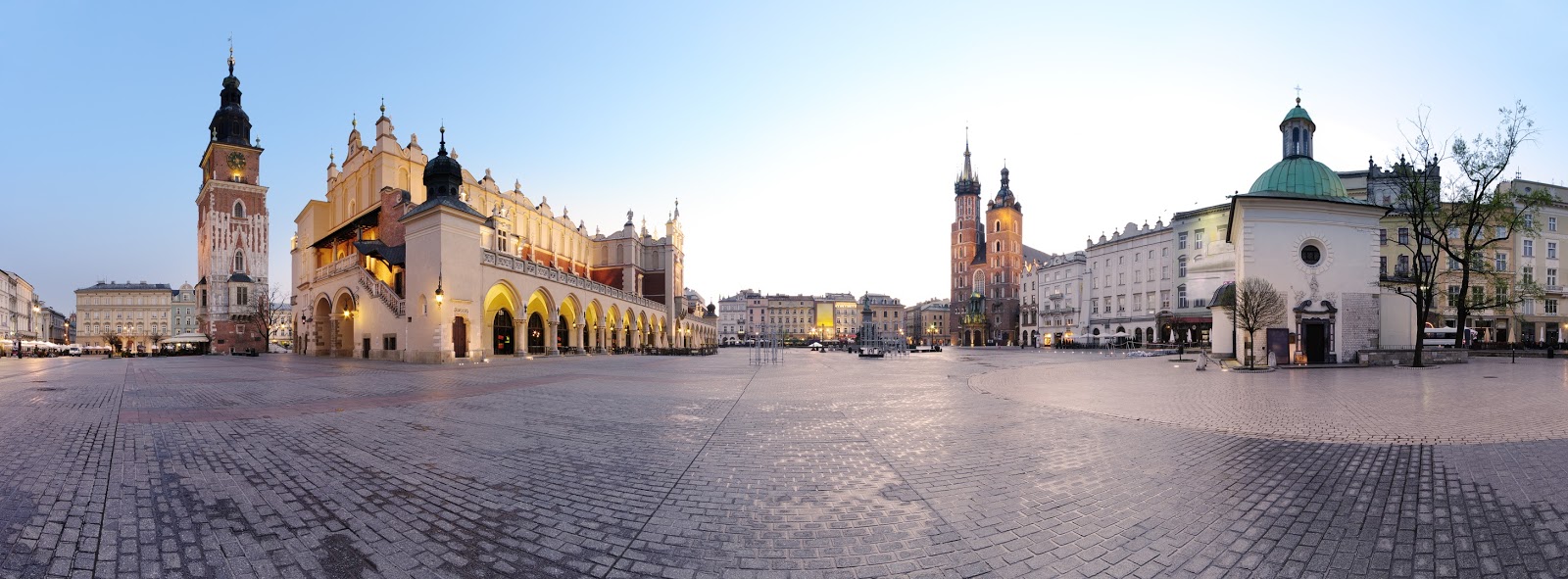
In the long history, Krakow was and is a very important academic center of Europe, the cradle of Polish literature and Polish language. It is here were first scriptoria, libraries and literary masterpieces.


With Krakow were related to the most prominent creators of Polish literature and language. Noteworthy are such artists as Adam Asnyk, Mikolaj Rej, Jan Kochanowski, Peter Skarga and Stanislaw Wyspianski. With the city's history involves the history of Polish Nobel Prize winners in literature: on the newspaper "Time" serialized his novels Henryk Sienkiewicz - author of Quo Vadis, who won the Nobel Prize in 1905. In Krakow had been too Wladyslaw Reymont - Nobel winner of 1924 (author Chłopi), Czeslaw Milosz - Nobel Prize winner of 1980. In Krakow, wrote and lived for a long part of life Wislawa Szymborska - winner of the 1996.

środa, 20 maja 2015

Krakow Barbican

Krakow Barbican is one of the finest buildings of medieval military architecture, not only in Poland but also in Europe! It is a gothic building with seven turrets that served as defensive fortifications the northern section of Krakow, which was devoid of the natural dam. It was built between 1498-1499.


You should know that in Europe survived only a few buildings of this type, and among them, Krakow Barbican really stands out. It is a huge building, maintained in very good condition, and its design is considered an original. In construction was used the latest achievements of medieval fortification.

piątek, 15 maja 2015

St. Mary's Basilica

He is often called the temple of Krakow. It is certainly one of the most important church in the city. It is located in the central part of the town - on the Main Square and thus it is visited by thousands of tourists. Through the ages, all the work at the church were sponsored by wealthy bourgeois family, therefore today it is one of the finest sacred architecture in Poland.

This lofty building, was built in the late XIV century. Apart from the fact that the aisles later were added chapels, the main body of the church hasn't changed much to this day. Earlier in her place stood a Romanesque temple, which built before the founding of the town in 1257. Any restoration work mainly concerned the interior. In the work participated the great, well-known artists like Jan Matejko, Stanislaw Wyspianski and Jozef Mehoffer.

A characteristic motif, which we can see on the outside of the temple, there are two towers of unequal height. Legend says that were built by two brothers, which competed with each other about which tower will be better. Unfortunately, one of the brothers killed the other and then committed suicide – that is the reason the towers are uneven, as if an "incomplete".

środa, 6 maja 2015

Nowa Huta

Nowa Huta - a district of Krakow, which stand out against the city own specificity, different tradition and culture. This district was createed in the period of socialism, which can be seen even in architecture. Huta was built as part of the Six Year Plan for Economic Development and in the premise district was to be the cradle of the development of the steel industry. This was to be independent socialist city, and as a result created a huge housing estate.

Today in Nowa Huta are metallurgical kombunat and Poland's largest plants of tobacco, together with the cement plant. Climate of Nowa Huta make Central Square, Huta's Administrative Centre, Wandy and Willowe housing estates, Nowa Huta Gates and Żeromski Hospital.

Nowa Huta has "own culture" and their distinctive artistic centers, including Łaźnia Nowa Theatres, Ludowy Theatre, Sphinx Cinema, Cultural Center of Nowa Huta, the Historical Museum and Polish Aviation Museum. There also has many religious buildings, palaces, mansions, forts and military facilities.

czwartek, 30 kwietnia 2015

Jagiellonian University

The Jagiellonian University is the oldest university in Poland and one of the oldest universities in Europe. It was founded in 1364, on the initiative of Kazimierz III Wielki, under the name Academy of Krakow. In 1400 was renovated by Władysław II Jagiełło, founded by Jadwiga Andegaweńska. His deep ties with the Jagiellonian dynasty contributed to today's university name.

Jagiellonian Uniwersity occupies the highest place in the rankings of Polish Universities because of the high level of education, which represents and achievements of students and graduates. The university grew over the years and enriched by new buildings. Along with the larger surface area it was also coming departments. Today, the Jagiellonian University consists of 12 departments – almost all fields of science and, additionally, Medical College, which includes 3 medical faculties.

The university has own buildings in the entire city - it has 4 separate campuses. First in the Old Town, the second next to the campus in the vicinity of University of Science and Technology and Agricultural University of Cracow, the third campus was established several years ago in the Ruczaj district, and the fourth is buildings Medical College.

The university provides students not only a very high level of education, but also the overall development interests, aspirations and talents. At the university operates countless scientific and hobbyist group. The university offers students a wide range of cultural projects

piątek, 24 kwietnia 2015

Krakow's mound

Krakow is the champion for the number of mounds located in the city. There are 5. They are popular and attracts crowds of walkers on a warm afternoon. Mounds are the part of landscape of the city and its surroundings. It is believed that they are places of burial and they were places of worship, observation and defense. They were built in prehistoric times, and later served as souvenirs of important historical events and persons, who deserving of commemoration for the country.


Kościuszki Mound - is located on the hill of blessed Bronisława. It was poured off in 1820-1823 and then called Kosciuszko Mound. Its construction was financed by public fundraiser. Mound has 34.1 m high. It is an amazing place, where you can admire all corners of the city. The area around the mound is the place of many outdoor events. Mound is a monument of national memory, because it contains the ground of the battlefields gen. Kosciuszko.

czwartek, 16 kwietnia 2015

Plac Bohaterów Getta

Plac Bohaterów Getta”, once called „Plac Zgody”, hides a rich history. It is located in Podgórze and the first it held there a part of the „Mały Rynek”. In this place was riding school used by the lancers, then a market place where traded pigs and cattle. The boundaries of the square changed - expanded the city and builded new buildings.

In 1915. announced an agreement about connection Krakow and Podgórze, which was a separate city. At the same time, opened a third bridge ( today „Powstańców Śląskich” bridge). A few years later the Society of Friends of Cracow Heritage Square changed its name "Mały Rynek" to „Plan Bohaterów Getta”. This name is connected with the aforementioned agreement.

At „Plac Zgody” was also housed the Bus Station, which handled the lines connecting Krakow with other cities in Podkarpacie province. It was the second bus station in Krakow.

The current name of the square has a close connection with the Second World War. The square was at that time a central point of the Krakow Ghetto (Jewish quarter in Krakow). There, in station building was stationed the police, and the square was a place where people gathered before deportation. People gathered on the west side of the square and in the central part was trucks which were loaded stolen things. In „Plac Bohaterów Getta” made the first selection in the ghetto, and then shoted more than 100 people. There was also the last selection made during the liquidation of the ghetto.